Search This Blog

Sunday, 16 October 2016

1 John 3:7-8

Dear children, do not let anyone lead you astray. The one who does what is right is righteous, just as he is righteous. The one who does what is sinful is of the devil, because the devil has been sinning from the beginning. The reason the Son of God appeared was to destroy the works of the devil. 

Jesus came to undo what Satan has done. Satan came to bind, to lie, to accuse, to imprison, to hurt, to maim, to kill. (John 10:10) Jesus came to destroy him - to "luo", to unbind, to loosen, to break up so that something no longer holds together. Jesus came not only to unbind what Satan has bound (Luke 13:16, John 8:32), but to unbind Satan himself: to undo him utterly, to expose him, to pull the carpet out from under his feet, to unstitch his seams.

First and foremost what Satan has done is lie. He is a liar, incapable of truth, the very reverse of the God who cannot lie. Satan cannot not lie. (John 8:42) And the thing he loves most to lie about is God. He loves to lie about the Creator to his creatures, and then to the creatures about themselves and each other. The story of the Garden starts with a twisting of the truth, a seed of doubt sown into Adam and Eve's beautiful understanding of the One who has made them and loved them: did God really say? (Genesis 3:1) We all fall prey to such a lie. Tozer defines idolotry as the entertainment of thoughts that are unworthy of God (The Knowledge of the Holy, p.4); Satan sows idol thoughts. Subtle whisperings that gather momentum until we are utterly blinded (2 Corinthians 4:4). God is not really love. He is not really holy. He is not really good. In fact, he is not really there at all. We cannot see what is true. We cannot see the truth of God's character amidst a mindful of distortions.

And so, Jesus. Jesus came to dispel lies, to correct our understanding. He came that we might know what God is really like (John 1:18): "Christ walked with men on earth that He might show them what God is like and make known the true nature of God to a race that had wrong ideas about Him." (ibid p.108) The work of the devil is to paint a false picture of our good God; the work of Christ is to scratch it out, to scrape off the layers of paint and oil, dust and decay, and reveal the true masterpiece. (Hebrews 1:3, Colossians 1:15)


Image result for palette

Saturday, 15 October 2016

1 John 3:4-6, 9

Everyone who sins breaks the law; in fact, sin is lawlessness. But you know that he appeared that he might take away our sins. And in him there is no sin. No one who lives in him keeps on sinning. No one who continues to sin has either seen him or known him... No one who is born of God will continue to sin, because God's seed remains in them; they cannot go on sinning because they have been born of God. 

I have been struggling with this section of John's letter. For John, sin and following Jesus are entirely incompatible. Paul says the same thing in Romans (6:1-4). In light of my own inability to be sin-less, reading such emphatic statements leads to one of two things: striving or despondancy. Either I determine that right now, starting this very instant, I am going to stop thinking anything remotely negative about anybody, and any other sinful thing that I might be liable to do; or, I realise the impossibity of achieving such a ludicrous goal and I give up and make a cup of tea instead. I don't think John was going for either of these outcomes.

An unexpected combination of Mother Teresa - acclaimed Catholic Saint - and Greg Boyd - slightly controversial American theologian - has helped to bring some clarity. Both - in very different ways - talk about living in the reality that God has aready won for us in Christ. Mother Teresa writes, "God is within me with a more intimate presence than that whereby I am in myself...for our lives to be fruitful they must be full of Christ." Boyd, going further, suggests that the point is that - for the one following Jesus - our life is already full of Christ. We are not on some mission to become sinless and spirit-filled; we are, in fact, both these things already. 

That feels heretical even as I write it. I am still a sinner, but I do want to be sinless. I have God's Holy Spirit, but it doesn't always feel like it. And yet and yet...John and Paul, seem to state that, for the Christian, this reality has already dawned. We cannot continue to sin because we died to sin. (Romans 6:2) God has already planted his Holy Spirit within our hearts. Part of what I think John is trying to do is urge his readers to recognise the reality that Christ won for them on the cross - to recognise it and start living in the joy and wonder of it rather than endlessly talking thinking praying preaching about how to enter in to such a reality in the first place. There is a danger of preoccupation. There is a danger of continually striving to be in a place where we can love and give and do when the reality is that we are already in such a place and are missing out on the opportunities of loving, giving, doing.

If we understand the truth of being one with Christ, of being united with him and living in him, then we will not sin. Except that we will. But - in some sense - it is the old, dead part of us that is doing it. (Romans 7:17) Not the new, transformed me but the me that died with Jesus on the cross. This doesn't mean that sin isn's a struggle. It doesn't mean that we shouldn't work with the partnership of the Holy Spirit to stop doing the things that God doesn't want us to do (Romans 8:13), but it means that the starting place is different. When I sin, I am not being true to myself. I am not living in the reality that Jesus won for me. I have slipped back into something that I used to do but that isn't really part of who I am anymore. (Ephesians 4:20-24) This, I think, is why Paul continually uses the language of old self / new life. We are called to act like ourselves. When we sin, we are not behaving in a way that is true to who we are. It is a contradiction. So much of a contradition, in fact, that John can call it an impossibility. We cannot go on sinning: to do so would be to betray the reality that we have become part of, to deny the truth of the cross and all that Jesus won for us. 


Wednesday, 7 September 2016

1 John 3:3

All who have this hope in him purify themselves, just as he is pure.

What do you hope for?
A slightly fluffy vox pox question
from a guy with glasses and a shaky mic
who shuffles his feet on the sidewalk 
squeaking nervously at passers by.

World peace. To win the lottery. A million quid. My body weight in chocolate. That it won't raint today.

And then
scratching deeper
hitting a nerve
an accidental moment of honesty
that bubbles up and out like a cork

For my back to get better. My wife not to be sick. My son to come home. To stop drinking. To know that it isn't always going to be like this, that something will change.

She arrives -
a whirlwind in pink 
with muddied knee and chocolate smudged face
running round in circles with invisible superhero cape flying free
pigtails played havoc upon by the wind
a gap where two teeth used to be

I want to live forever.

The classic child's answer
adults roll their eyes
chuckle throatily -

Don't we all.

Don't. We. All.

Yearn for hope for long for something more
a something that is different to every other something so far
a something that is solid and certain and sure
a something we can hold tightly in both hands
that is stronger than hurt and pain
that is greater than addition and loss
than what he did to me when I was younger
than when she left me on my own
than how they treated me and made me feel
than emotion and insecurity, disappointment and redundancy
hospital waiting rooms and grave sides.

What do you hope for?

For transformation, freedom, rescue
the realisation of true identity
of knowing the reality
of so much lavish love
that I am invincible
I am fearless
I am free from whatever you might care to think of me
because me eyes are on Him.

I hope in Him
My hope is in the hopeful One
He is Hope
Contains it, delivers it, dollops it
into my frightened heart so that I run free
in cohoots with Little Miss Pigtails.

I want to live forever.

Tuesday, 9 August 2016

1 John 3:1-2

See what great love the Father has lavished on us that we should be called the children of God. And that is what we are! The reason the world does not know us is that it did not know him. Dear friends, now that we are children of God, and what we will be has not yet been made known. But, we know that when Christ appears we shall be like Him for we hall see Him as He is. 

More identity crisis. Don't you know who you are? Remember. See. Look. Behold. Experience the beautiful, extravagant reality of being a child of God. I am reminded of the story of the Prince and the Pauper. Did the Prince forget who he was? Knocked about, bruised, battered by the world. Repeatedly told that he was delusional, that he couldn't possibly be royalty. Did he start to believe that for himself? Doubting his birth and his rightful place? 


John asks for a different kind of paupering. Princes and princesses undercover but with the purpose of being discovered. Our purpose is to betray our identity. We are meant to be found out. Our character should expose us. Unmistakably royal. Kind. Generous. Compassionate. Sacrificial. When people saw Jesus they doubted his parentage (Matthew 13:55). This man couldn't possibly be the son of a carpenter. There had to be more to it. And so with us - there has to be more to us. Our behaviour should be inexplicable. It should beg the question: Who on earth are you? 

And in the answering we must point back to Him. We must take after John the Baptist in being those who direct people away from ourselves (John 3:26-30). John says that people will not recognise us as God's children because they do not know God. It is impossible to see the resemblance between a Father and his children if the Father is not known. And so our task is to reveal the identity of the Father through being his children. There is a sad nod of recognition when a teenager's awful behaviour is understood in the light of an abusive childhood; when patterns and actions are traced back to a child's experience of their parents. Not so with us.When people ask for an explanation for our inexplicable behaviour we are to smile and say, Let me tell you about my Dad.

Tuesday, 26 July 2016

1 John 2:29

If you know that he is righteous, you know that everyone who does what is right has been born of him.

This is an identity issue. In John’s gospel, Nicodemus comes to Jesus in the middle of the night wanting to whether this strange man from Nazareth is really who he says he is, but Jesus flips the pharisee’s question on its head and it is Nicodemus’ identity that is called into question instead: does Nicodemus really belong to God’s kingdom? Has he been born again? In essence, Jesus is asking who his Father is. (John 3:1-21)

In his letter, John repeatedly uses his rabbi’s phrase: born again. The greek word is ‘gennao’, to be fathered by. Have you been fathered by God? Have you been begotten not just by the will of a man and a woman but by the Spirit (John 1:12-13, 3:5-8)? Because – if you have – it has consequences for your behaviour: those who have fathered by The Father do what is right. John is concerned with authenticity. How can you be sure that you are following Jesus? What are the hallmarks of a genuine relationship with the Son? What does fellowship with the Father look like?

I don’t think he intends to scaremonger, but he wants his readers to be sure. He wants them to know know know that they are born again, and he wants them to be cautious of those who claim to follow Jesus and yet live lives that do not testify to their identity of sons and daughters of God. There is beautiful, wonderful affirmation here, but there is also a challenge: to what extent are we like our heavenly Father? Where do I need to live differently that I might look like my Father’s daughter? Jesus only did what he saw the Father doing (John 5:19). He was completely in sync with his Dad – so much so that he could say If you have seen me then you have seen the Father. (John 14:9) Can I say this? Can I say that if you have spent time with me then you will have glimpsed something of the character and heart of God?

We are not Jesus. We are not perfect. We are still weighed down by sinful desires and yet John says that sin stops being attractive for the Jesus follower. (1 John 3:3, 3:6, 3:9) We stop doing wrong thing and start doing right things because, through the Spirit, we are being formed into the image of Christ; we are being moulded to look like the Son. (Galatians 4:19, 2 Corinthians 3:18) Through the Spirit sin loses its appeal; it stops tasting good. We don’t lose the capacity to sin; we lose the desire to do so. For John, this is one of the hallmarks of authentic Christianity.

Saturday, 9 July 2016

1 John 2:28

And now, dear children, continue in him, so that when he appears we may be confident and unashamed before him at his coming.

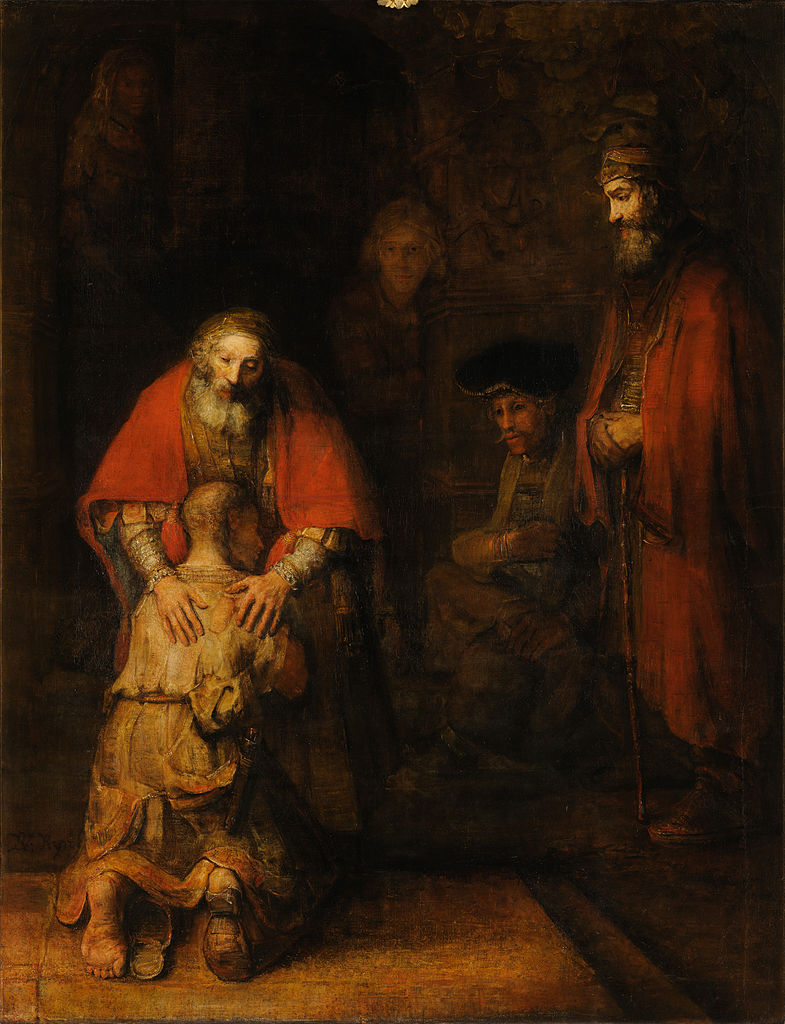
There is a beautiful tenderness to John's ferocity. In chapter 2 alone, he uses the refrain 'dear children' five times - not a patronising or belittling address, but a reminder of who his readers are to him: they are his little ones, the precious offspring born of his ministry, his dearly beloved. And yet, there is a fury to this gentleness, a vehement kind of determination, a passionate plea - these are the words of a Father shouting out across the fields to his prodigal as he walks away. Please. Don't. Do. This. These are words full of jealous, firey love that calls out to the wandering adolescent about to make a terrible mistake. Words that seek to save and protect, to spare from harm. To prevent the vulnerable from being led astray (2:26, 3:7)

John urges his readers to stick with it. Continue, remain, remember, keep going. A father standing by the side of the track on Sports Day coaxing his child to look ahead rather than look at his competitors, to get up when they stumble, to remember that there is an end, a finish line, a promise (2:25), a prize.

And so, two questions: who is cheering me on today? And who am I cheering for? As I am urged to continue, am I also urging others? Do I have the same fierce tenderness of John that delivers timely encouragement when it's most needed? Even though I was once a prodigal, have I also become a Father? That is the reminder that Henri Nouwen gives in his book, The Return of the Prodigal Son, that regardless of which kind of son we are, the greater call on our lives is to become a father. Once we know the wonder and the grace and the joy and the goodness of being welcomed home, we must do as John did: we must become fathers ourselves that we might call home lost sons.

"The time has come to claim your true vocation — to be a father who can welcome his children home." (Henri Nouwen)


Tuesday, 5 July 2016

1 John 2:26-27

I am writing these things about those who would lead you astray. As for you, see that the anointing you received from him remains in you, and you do not need anyone to teach you. But as his anointing teaches you about all things and as that anointing is real, not counterfeit - just as it has taught you: remain in him.

How easily I am led astray. The word here describes a 'wandering planet', a planet that has somehow flung itself out of orbit and is spinning and spiralling into the unknown. I seem to do this most days. I am the hammer all too keen to be released from the grip of the hammer thrower, determined to make my own course instead of trusting in the hands of the one who holds me, the one whose expertise will let me go only so that I will be guided to the place he would have me. I am the hammer that ends up outside the boundary markers with nothing left to do but wait to be found and collected. The lost sheep of the field events. 

Do not let yourself be led astray. Do not let yourself be distracted, lured, enticed, confused. For you have the remedy. You have the Holy Spirit. Deep magic indeed. We - little old, imperfect, sinful, messed up w - carry the Holy Spirit. Since the day that we decided to follow Jesus, He has dwelt within us, He has remained in us in exactly the same way that he did in Jesus. Unlike the Old Testament heroes of old who merely carried the presence of the Holy Spirit for a season, John the Baptist's Messiah was to be identified by the remaining presence of the Spirit of God; we are to be identified in much the same way. 

We are those in whom the Spirit remains. We have everything we need to follow Jesus and live as he did. God has provided us with a permanent teacher, a scripture-revealer, wisdom-giver, gift-bestower, truth-teller. But this is a two-person tango. We remain in him even as he remains in us. We give Him our full attention. We talk to Him. We let him lead us, guide us, teach us, correct us, convict us. This is not a one-way conversation; we are invited into dialogue.